TEXTS
Ormea, segni del paesaggio
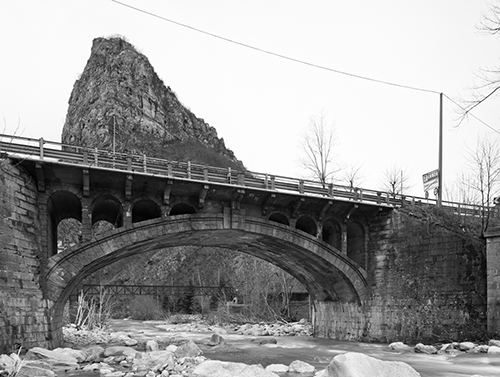
Il lavoro di Marco Introini si definisce segnico, ovvero un atlante di segni che si intersecano nel paesaggio della Alta Valle del Tanaro e che trovano epicentro in Ormea e nei suoi dintorni. Una valle dove le inftrastrutture naturali ed artificiali si sovrappongono su piani e quote diverse, dal fiume che ne segna radicalmente la geografia, sia nei periodi di calma sia durante gli episodi alluvionali, fino al potente emergere tra i boschi della ferrovia Ceva-Ormea. Il fotografo come lo scrittore e il camminatore sono gli esploratori contemporanei del territorio che viene descritto con la parola scritta e visiva. Introini, formatosi al Politecnico di Milano, ha sempre avuto una predilezione per i segni, non solo quelli fisici che si ritrovano attraversando una valle, bensì quelli che lui traccia sul foglio bianco come annotazioni a schizzo dei luoghi in una modalità simile ai geografi. L’intento é chiaro, mappare il territorio e restituirlo con la fotografia rigorosa del grande formato del banco ottico in bianconero, erede dei pionieri che facevano su e giù per le montagne delle monumentali valli americane. In questo ragionamento il lavoro di Introini per Nasagonando Art Project si concentra, come in una pittura segnica degli anni sessanta, su elementi caratterizzanti il territorio, tra ferrovia, statale del Colle di Nava e montagne. Una analisi più approfondita porta alla luce una serie di sottotemi. Il fiume si porta il sottotema dei canali e delle chiuse, la ferrovia si relaziona con il suo tracciato e le piccole stazioni, i terrazzamenti dialogano con le cave e poi le presenze di archeologia industriale riassunte nel complesso monumentale della ex Cartiera di Ormea. Questo progetto definisce la geografia contemporanea della Valle del Tanaro, eleggendo il fiume come matrice da cui tutto parte, bellezza e distruzione nei momenti in cui si ribella e si allarga alla ricerca di spazio, riproponendo, nell’installazione fotografica pensata per il Deposito ferroviario, un dialogo con l’installazione permanente Tòn-No (Tanaro) di Alessandro Chiossone e Roberta Volpone.
Emanuele Piccardo
2018
Ormea, Signs of the Landscape
Marco Introini’s work can be defined as sign-based: an atlas of signs that intersect in the landscape of the Upper Tanaro Valley and find their epicentre in Ormea and its surroundings. A valley where natural and artificial infrastructures overlap on different planes and elevations, from the river that radically shapes its geography, both in periods of calm and during flood events, to the powerful emergence of the Ceva–Ormea railway line cutting through the woods. The photographer, like the writer and the walker, is a contemporary explorer of the territory, which is described through written and visual language.
Introini, trained at the Politecnico di Milano, has always shown a predilection for signs, not only the physical ones encountered while crossing a valley, but also those he traces on the blank page as sketch-like annotations of places, in a way akin to geographers. His intention is clear: to map the territory and render it through the rigorous photography of large-format black-and-white view cameras, heir to the pioneers who went up and down the mountains of the monumental American valleys.
Within this framework, Introini’s work for Nasagonando Art Project focuses, as in a sign-based painting of the 1960s, on the key elements that characterize the territory: the railway, the state road to the Colle di Nava and the mountains. A closer analysis brings to light a series of sub-themes. The river carries with it the sub-theme of canals and locks; the railway engages with its track and its small stations; the terracing enters into dialogue with the quarries; and finally, the traces of industrial archaeology are summed up in the monumental complex of the former Ormea Paper Mill.
This project defines the contemporary geography of the Tanaro Valley, electing the river as the matrix from which everything originates: beauty and destruction at the moments when it rebels and overflows in search of space, echoing—through the photographic installation conceived for the former railway depot—the dialogue with the permanent installation Tòn-No (Tanaro) by Alessandro Chiossone and Roberta Volpone.
Emanuele Piccardo
2018
Il lavoro di Marco Introini si definisce segnico, ovvero un atlante di segni che si intersecano nel paesaggio della Alta Valle del Tanaro e che trovano epicentro in Ormea e nei suoi dintorni. Una valle dove le inftrastrutture naturali ed artificiali si sovrappongono su piani e quote diverse, dal fiume che ne segna radicalmente la geografia, sia nei periodi di calma sia durante gli episodi alluvionali, fino al potente emergere tra i boschi della ferrovia Ceva-Ormea. Il fotografo come lo scrittore e il camminatore sono gli esploratori contemporanei del territorio che viene descritto con la parola scritta e visiva. Introini, formatosi al Politecnico di Milano, ha sempre avuto una predilezione per i segni, non solo quelli fisici che si ritrovano attraversando una valle, bensì quelli che lui traccia sul foglio bianco come annotazioni a schizzo dei luoghi in una modalità simile ai geografi. L’intento é chiaro, mappare il territorio e restituirlo con la fotografia rigorosa del grande formato del banco ottico in bianconero, erede dei pionieri che facevano su e giù per le montagne delle monumentali valli americane. In questo ragionamento il lavoro di Introini per Nasagonando Art Project si concentra, come in una pittura segnica degli anni sessanta, su elementi caratterizzanti il territorio, tra ferrovia, statale del Colle di Nava e montagne. Una analisi più approfondita porta alla luce una serie di sottotemi. Il fiume si porta il sottotema dei canali e delle chiuse, la ferrovia si relaziona con il suo tracciato e le piccole stazioni, i terrazzamenti dialogano con le cave e poi le presenze di archeologia industriale riassunte nel complesso monumentale della ex Cartiera di Ormea. Questo progetto definisce la geografia contemporanea della Valle del Tanaro, eleggendo il fiume come matrice da cui tutto parte, bellezza e distruzione nei momenti in cui si ribella e si allarga alla ricerca di spazio, riproponendo, nell’installazione fotografica pensata per il Deposito ferroviario, un dialogo con l’installazione permanente Tòn-No (Tanaro) di Alessandro Chiossone e Roberta Volpone.
Emanuele Piccardo
2018
Ormea, Signs of the Landscape
Marco Introini’s work can be defined as sign-based: an atlas of signs that intersect in the landscape of the Upper Tanaro Valley and find their epicentre in Ormea and its surroundings. A valley where natural and artificial infrastructures overlap on different planes and elevations, from the river that radically shapes its geography, both in periods of calm and during flood events, to the powerful emergence of the Ceva–Ormea railway line cutting through the woods. The photographer, like the writer and the walker, is a contemporary explorer of the territory, which is described through written and visual language.
Introini, trained at the Politecnico di Milano, has always shown a predilection for signs, not only the physical ones encountered while crossing a valley, but also those he traces on the blank page as sketch-like annotations of places, in a way akin to geographers. His intention is clear: to map the territory and render it through the rigorous photography of large-format black-and-white view cameras, heir to the pioneers who went up and down the mountains of the monumental American valleys.
Within this framework, Introini’s work for Nasagonando Art Project focuses, as in a sign-based painting of the 1960s, on the key elements that characterize the territory: the railway, the state road to the Colle di Nava and the mountains. A closer analysis brings to light a series of sub-themes. The river carries with it the sub-theme of canals and locks; the railway engages with its track and its small stations; the terracing enters into dialogue with the quarries; and finally, the traces of industrial archaeology are summed up in the monumental complex of the former Ormea Paper Mill.
This project defines the contemporary geography of the Tanaro Valley, electing the river as the matrix from which everything originates: beauty and destruction at the moments when it rebels and overflows in search of space, echoing—through the photographic installation conceived for the former railway depot—the dialogue with the permanent installation Tòn-No (Tanaro) by Alessandro Chiossone and Roberta Volpone.
Emanuele Piccardo
2018
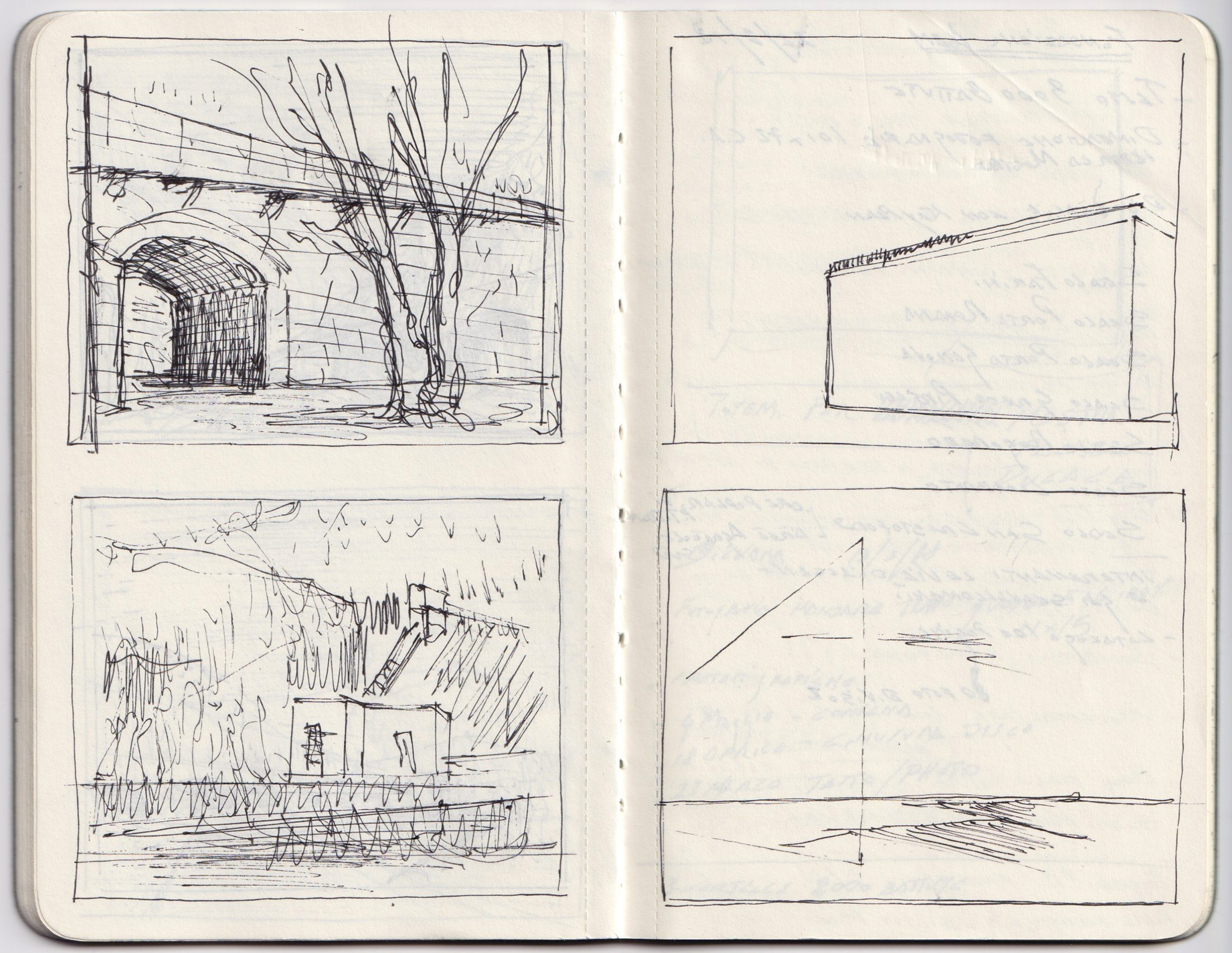
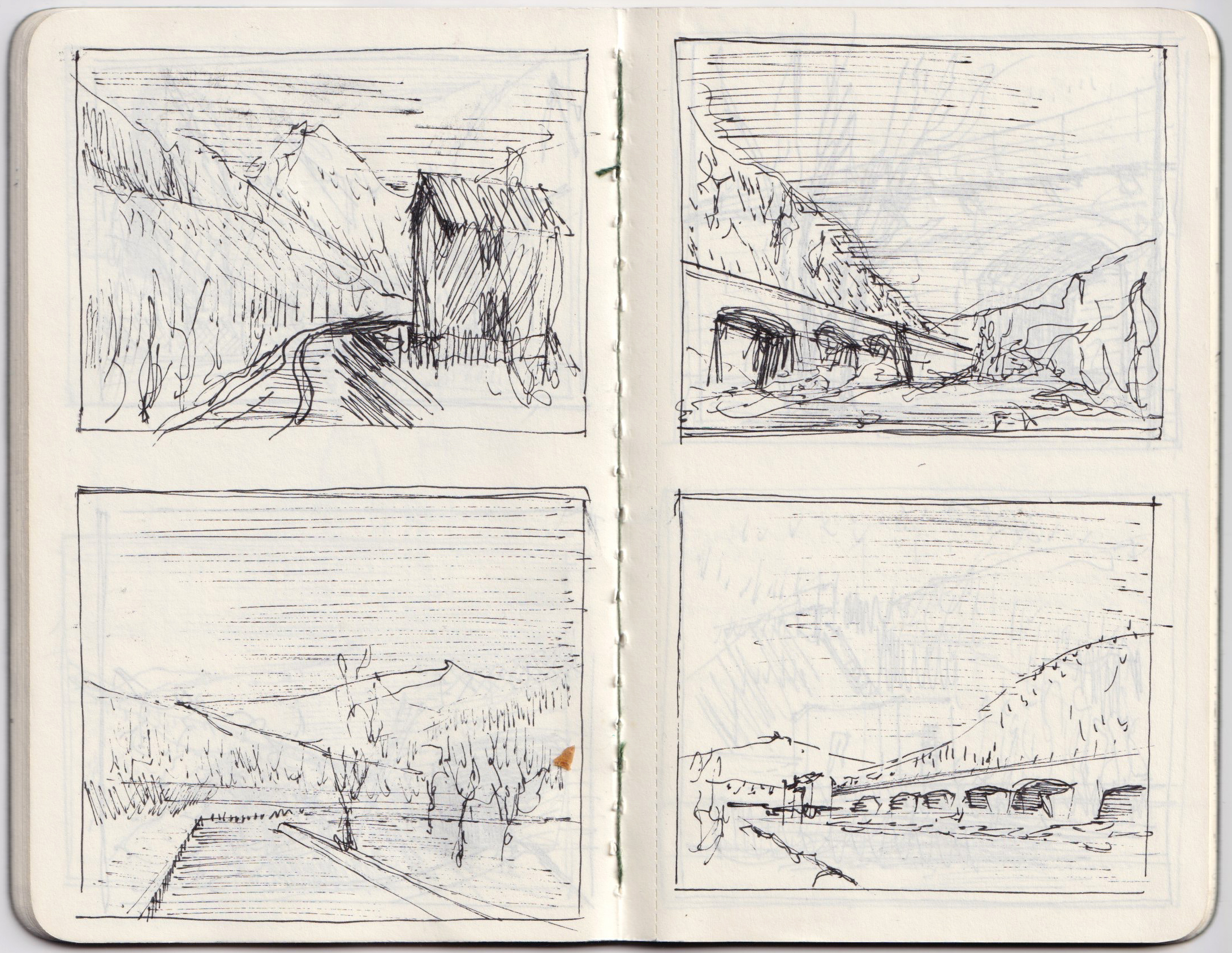
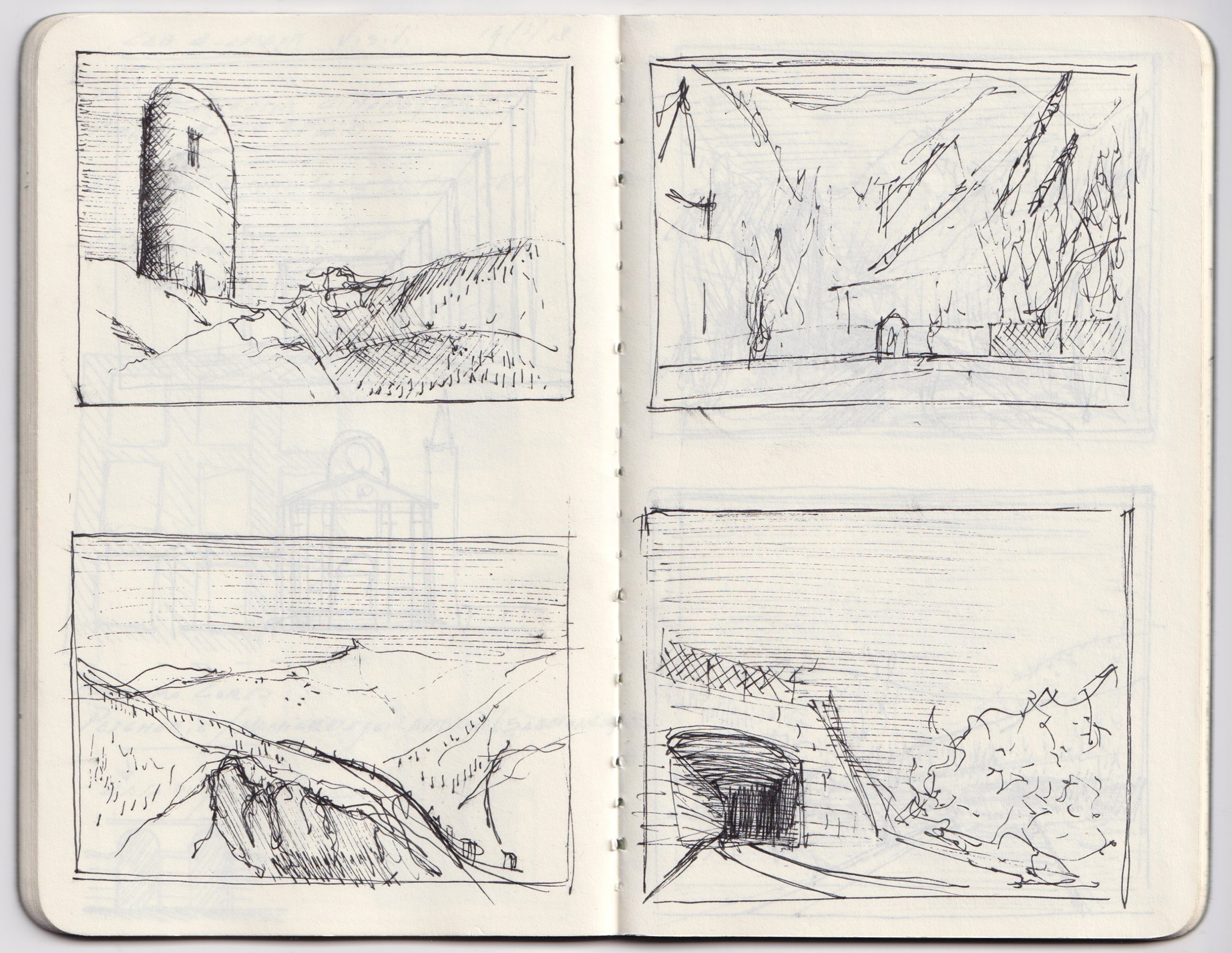
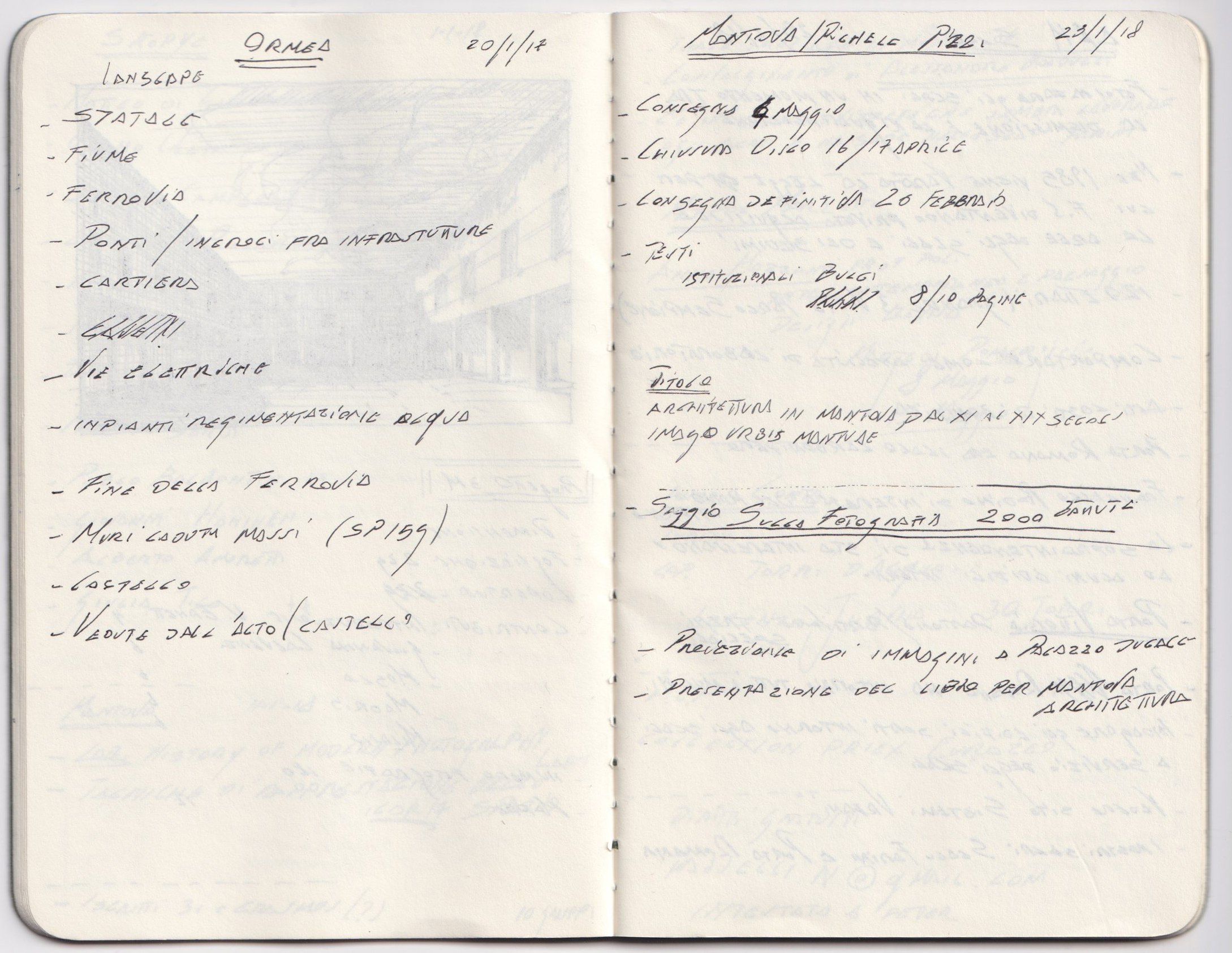
Some sketches before and
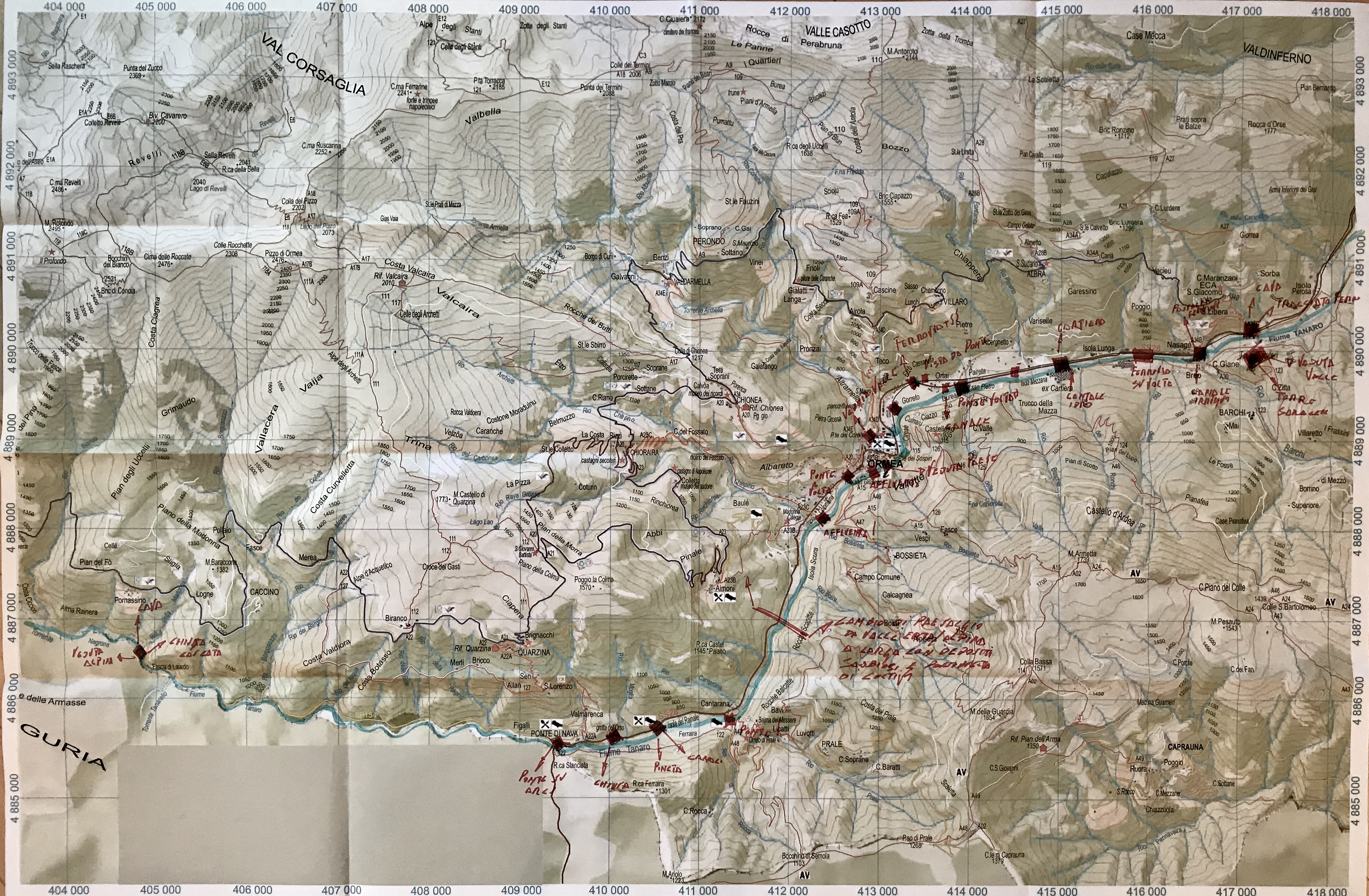
the working map for the exploration
the working map for the exploration
to photo work